Used Vending Machines
Compare Costs, ROI & Free Machine Options
The vending decision that defines your bottom line.
For Australian businesses, vending machines are no longer just a convenience — they’re a micro‑business model.
Whether you’re running a gym, warehouse, school, or office, the right machine can quietly generate hundreds of dollars a week in passive income.
But the big question remains: Should you buy a used vending machine, invest in a new one, or go with a free‑supplied option?
This guide compares all three paths — breaking down costs, ROI, reliability, and long‑term value — so you can make a decision that fits your budget and your business goals.
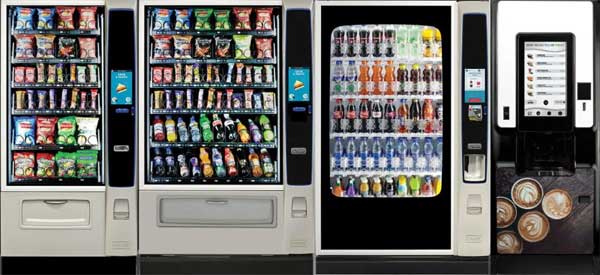
The Australian vending market in 2026
The vending industry in Australia has matured fast. Cashless payments, telemetry, and smart inventory tracking have turned vending into a data‑driven business, not just a coin‑drop side hustle.
Today’s market offers three main ownership models:
Model Upfront Cost Ownership Maintenance Profit Share
Used Machine $2,000–$4,000 You own it You manage 100% yours
New Machine $5,000–$11,500 You own it You manage 100% yours
Free Machine $0 Supplier owns Supplier manages You may get small commission
Each model has its place — but the used machine often delivers the best balance of cost, control, and ROI.
Used vending machines: the value equation
Buying used is not about cutting corners — it’s about buying smart.
A quality refurbished machine can deliver the same performance as a new one for half the cost. Let’s break down the numbers.
Typical used machine costs in Australia
* Snack machine: $2,000–$3,500
* Drink machine: $2,500–$4,000
* Combo machine: $3,000–$4,500
* Smart/AI machine: $4,000–$6,000 (refurbished)
Typical new machine costs
* Snack machine: $6,000–$8,000
* Drink machine: $7,000–$10,000
* Combo machine: $8,000–$11,500
* Smart/AI machine: $12,000–$18,000
That’s a 40–60% saving upfront.
ROI comparison: used vs new
Let’s run a realistic ROI scenario for an average Australian workplace.
Metric Used Machine New Machine
Purchase Price $3,000 $8,000
Weekly Profit (after stock) $150 $150
Payback Period 20 weeks (≈5 months) 53 weeks (≈1 year)
Annual Profit (after payback) $7,800 $7,800
ROI after 2 years 260% 97%
Even accounting for minor repairs, the used machine wins hands‑down for speed of payback and return on capital.
The long game: lifespan and servicing
A vending machine is a mechanical asset — not a disposable gadget. With proper servicing, a good machine can last 15–20 years.
Key maintenance factors
* Compressor servicing every 2–3 years
* Coin mech and note reader cleaning monthly
* Firmware updates for cashless systems
* Regular stock rotation and hygiene checks
A well‑maintained used machine can easily outlive a poorly maintained new one. It’s not about age — it’s about care.
The hidden truth: even new machines can fail
Here’s something most factory reps won’t admit:
Even brand‑new vending machines can turn out to be lemons.
Manufacturing isn’t perfect. Sometimes machines are rushed through assembly — wiring errors, faulty sensors, or poor calibration. These “Friday‑made” machines can cause endless headaches despite being brand new.
Meanwhile, a refurbished used machine that’s been tested, serviced, and proven in the field often runs smoother.
Free vending machine options: convenience vs control
Many Australian suppliers offer free vending machines — they install, stock, and service the machine at no cost to you.
Sounds perfect, right? But here’s the catch.
Pros
* No upfront cost
* No maintenance or stock management
* Ideal for staff convenience
Cons
* You don’t own the machine
* You don’t control pricing or products
* You may earn little or no commission
* Supplier can remove the machine anytime
For businesses that just want staff amenities, free machines are great. But if you want profit and control, owning your machine — even a used one — is the smarter play.
Comparing total cost of ownership (TCO)
Over a 5‑year period, here’s how the numbers stack up:
Cost Component Used Machine New Machine Free Machine
Purchase $3,000 $8,000 $0
Maintenance $500 $500 $0
Repairs $800 $400 $0
Electricity $1,200 $900 $0
Total 5‑Year Cost $5,500 $9,800 $0
Ownership Yes Yes No
Profit Retained 100% 100% 0–20%
Even with repairs, the used machine delivers nearly double the ROI of a new one — and infinitely more than a free machine.
Energy efficiency and running costs
Older machines can use more power, but the difference isn’t always dramatic.
Typical power use
* Older drink machine: 6–8 kWh/day
* New drink machine: 4–6 kWh/day
At $0.30/kWh, that’s roughly $2.40/day vs $1.80/day — a $0.60 difference. Over a year, that’s about $220 extra — easily offset by the lower purchase price.
If you’re buying used, look for machines with:
* LED lighting
* Modern compressors
* Updated insulation
These upgrades narrow the efficiency gap.
Financing and tax advantages
Used machines can also be tax‑deductible assets.
Instant asset write‑off (Australia)
Small businesses can often claim the full cost of a used vending machine in the year of purchase — subject to ATO thresholds.
That means your $3,000 machine could reduce your taxable income by the same amount.
Depreciation
Even if you don’t claim instantly, vending machines depreciate over 5–10 years, giving ongoing tax benefits.
Supplier reputation matters
Whether you buy new or used, the supplier makes or breaks the deal.
Look for:
* Australian‑based support
* Warranty on refurbished units
* Access to spare parts
* Transparent service history
* Cashless upgrade options
Avoid “shed sellers” who flip machines without testing. A reputable supplier will provide photos, serial numbers, and service records.
Smart vending and AI upgrades
Used doesn’t mean outdated. Many refurbished machines can be upgraded with:
* Telemetry systems (remote monitoring)
* Tap‑and‑go payment modules
* Smart inventory tracking
* Digital screens for advertising
These upgrades cost $300–$800, but they can increase sales by 20–40% through better product management and visibility.
When used machines make the most sense
Used vending machines are ideal for:
* Start‑ups and small operators
* Regional or industrial sites
* Businesses testing new locations
* Companies wanting fast ROI
* Operators expanding routes without heavy capital
If you’re building a vending network, used machines let you scale faster — more machines, more locations, more income.
When new or free machines are better
Go new or free if:
* You want zero maintenance
* You need brand‑new aesthetics for high‑profile sites
* You require manufacturer warranty
* You prefer hands‑off operation
For corporate offices or retail centres, image matters — and new machines can justify the cost.
Real‑world ROI example (Australia)
Let’s take a real scenario:
* Location: Warehouse in Newcastle, NSW
* Machine: Used combo vending machine ($3,200)
Another Real‑world ROI example (Australia)
Let’s take a real scenario from a typical Australian workplace.
Location: Warehouse in Newcastle, NSW — 65 staff, mixed shifts, 24/7 operation.
Machine: Used combo vending machine — refurbished, cashless‑enabled Purchase price: $3,200
Weekly sales:
* Drinks: $280
* Snacks: $180
* Total revenue: $460/week
Stock cost (COGS):
Average 50%
Weekly profit:
ROI calculation:
That’s just under 14 weeks — around 3 months to recover the full cost of the machine.
Annual profit after payback:
So a $3,200 used machine can realistically generate $12,000 profit per year in a strong location.
Even if you factor in:
* $300/year servicing
* $200/year repairs
* $250/year electricity
You’re still clearing over $11,000 profit annually.
That’s why used machines are such a powerful investment.
When used machines outperform new machines
A lot of operators assume new = better. But in real‑world Australian conditions, used machines often outperform new ones because:
1. Lower capital risk
If a location underperforms, you haven’t sunk $10k into a machine.
2. Faster scaling
With $10,000 you can buy:
* 1 new machine, or
* 3 used machines
Three machines = three locations = three income streams.
3. Proven reliability
A used machine that has already run for 5–10 years without major issues is often more trustworthy than a brand‑new model with untested electronics.
4. Lower stress
Scratches, dents, and cosmetic wear don’t matter as much. You focus on profit, not perfection.
The “Friday machine” problem (why new machines fail too)
This is something industry veterans talk about quietly:
Some brand‑new vending machines come out of the factory with faults.
Why?
* Rushed assembly
* Poor quality control
* Inexperienced workers
* Faulty components
* Wiring mistakes
* Calibration issues
These “Friday afternoon machines” can cost you:
* Lost sales
* Warranty callouts
* Angry staff
* Downtime
* Replacement parts
* Technician fees (if not covered)
Meanwhile, a refurbished used machine that’s been tested, repaired, and field‑proven can run for years without drama.
Free vending machine options: who should choose them?
Free vending machines are extremely popular in Australia — especially in:
* Offices
* Schools
* Hospitals
* Government buildings
* Warehouses
* Gyms
How free machines work:
* Supplier installs the machine
* Supplier stocks it
* Supplier maintains it
* Supplier handles breakdowns
* You pay nothing
* You may receive a small commission
Best for:
* Businesses that want convenience
* Workplaces that don’t want to manage stock
* Sites where profit isn’t the priority
* Staff amenity programs
Not ideal for:
* Operators wanting to build a vending business
* Businesses wanting full control
* Locations with high profit potential
* Anyone wanting to maximise ROI
Free machines are zero risk, but also zero ownership.
Cost comparison: used vs new vs free
Here’s a clean breakdown over a 5‑year period.
Used machine (you own it)
* Purchase: $3,000
* Repairs: $800
* Maintenance: $500
* Electricity: $1,200
* Total cost: $5,500
* Profit retained: 100%
New machine (you own it)
* Purchase: $8,000
* Repairs: $400
* Maintenance: $500
* Electricity: $900
* Total cost: $9,800
* Profit retained: 100%
Free machine (supplier owns it)
* Purchase: $0
* Repairs: $0
* Maintenance: $0
* Electricity: $0
* Total cost: $0
* Profit retained: 0–20%
Winner for ROI:
Used machine — every time.
The hidden savings of used machines
Used machines save money in ways most people don’t consider:
1. Lower depreciation
A new machine loses value fast. A used machine has already depreciated — so you lose nothing.
2. Cheaper parts
Older models often have cheaper, more available parts.
3. Lower insurance costs
Some operators insure their machines — used machines cost less to insure.
4. Lower stress
If someone bumps or scratches a $3,000 machine, you shrug. If they damage a $12,000 machine, you feel it.
Cashless payments: the upgrade that boosts sales
Whether new or used, adding a cashless reader is essential in 2026.
Benefits:
* 70–90% of sales are now tap‑and‑go
* Higher average spend
* Fewer jams
* Remote monitoring
* Sales reporting
* Stock alerts
Upgrade cost:
$350–$700 depending on model.
Sales increase:
20–40% on average.
This upgrade alone can pay for itself in 4–8 weeks.
How to choose the right used vending machine
Here’s a quick checklist:
✔ Ask for service history
A good supplier will show you what’s been replaced.
✔ Check the refrigeration
The compressor is the heart of the machine.
✔ Inspect the payment systems
Coin mech + note reader + cashless.
✔ Look for rust or water damage
Especially around the base.
✔ Test every selection
Every spiral should turn smoothly.
✔ Ask about spare parts availability
Some older models are harder to service.
✔ Check the warranty
3–12 months is standard for refurbished units.
When used machines are the best choice
Used machines are ideal when:
* You want fast ROI
* You’re testing a new site
* You’re building a vending route
* You want to scale quickly
* You want low risk
* You want maximum profit retention
If you’re serious about vending, used machines let you grow three times faster than buying new.
When new machines are worth the investment
New machines make sense when:
* You need a premium look
* You want the latest tech
* You want full warranty
* You’re placing machines in high‑profile locations
* You want long‑term stability
Corporate offices, shopping centres, and airports often prefer new machines.
Final verdict: used vending machines deliver the best balance of cost, ROI & flexibility
For most Australian businesses — especially warehouses, gyms, schools, and industrial sites — used vending machines offer the best overall value.
You get:
* Lower upfront cost
* Faster ROI
* Strong long‑term profit
* Proven reliability
* Upgrade flexibility
* Lower risk
* Higher scalability
And with proper servicing, a good used machine can last 15–20 years.
Whether you’re starting a vending business or adding a machine to your workplace, used machines give you the best mix of affordability, performance, and profit.
